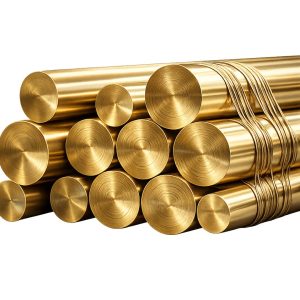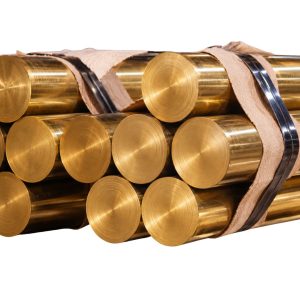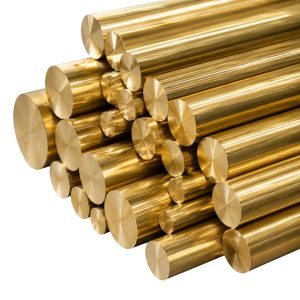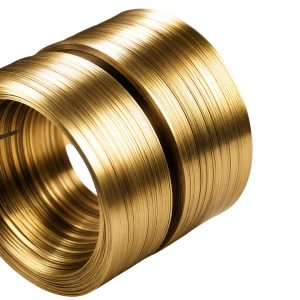
CDA485 (Naval Brass, High Leaded)
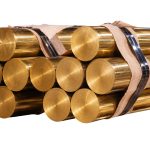
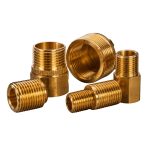
CDA485 Naval Brass is a high leaded copper-zinc-tin alloy designed for marine and industrial applications. It offers good hot forming capacity, strong machinability and reliable performance in saltwater and freshwater environments.
- Description
- Product Specifications
Description
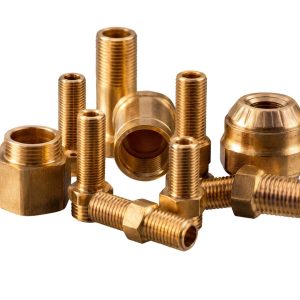
CDA485 Naval Brass is a corrosion-resistant brass alloy commonly used where strength, durability and machining performance are required. Its higher lead content improves machinability, making it suitable for precision parts such as screw machine components, valve stems, gears and light bearings.
This alloy is widely used in marine construction and related industrial applications where hard, strong and corrosion-resistant material is needed. It is suitable for marine hardware, seawater valve stems, fasteners and machined components used in demanding service conditions.
Key Features:
- High leaded naval brass alloy
- Suitable for marine and industrial applications
- Good corrosion resistance in saltwater and freshwater environments
- Machinability rating of 70
- Forgeability rating of 90
- Good hot forming capacity
- Suitable for hot forging, pressing and machining
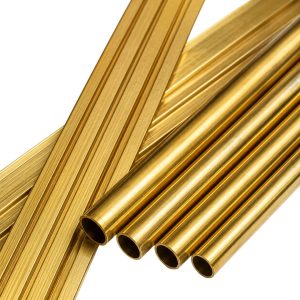
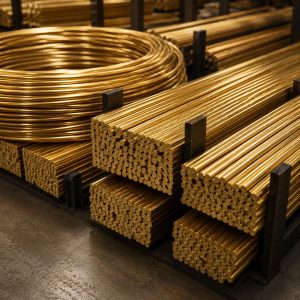
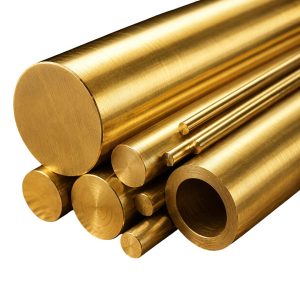
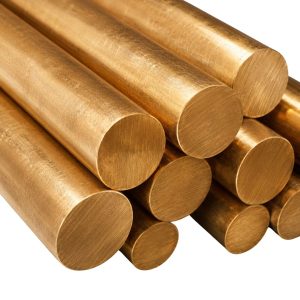
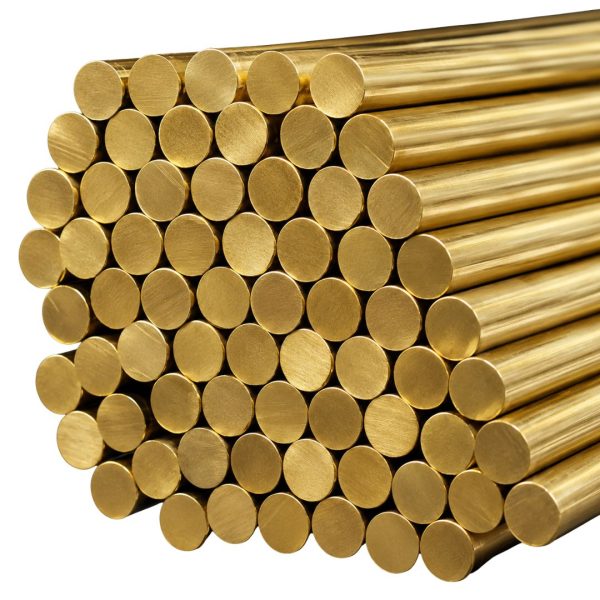
- Common shapes include round, square, rectangular, hexagonal and profile
| Element | Composition | Nominal |
|---|---|---|
| Copper (Cu) | 59.0-62.0% | 60.5% |
| Lead (Pb) | 1.3-2.2% | 1.8% |
| Tin (Sn) | 0.50-1.0% | 0.7% |
| Iron (Fe) | 0.10% max | – |
| Zinc (Zn) | Remainder | 37.5% |
| Cu + Named Elements | 99.6% min | – |
| Form | Temper | Section Size | Tensile Strength | Yield Strength | Elongation | Rockwell Hardness | Shear Strength |
|---|---|---|---|---|---|---|---|
| Rod | O60 | 25.4 mm | 393 MPa | 172 MPa | 40% | 55 B | 248 MPa |
| Rod | H01 | 25.4 mm | 476 MPa | 317 MPa | 20% | 78 B | 269 MPa |
| Rod | H02 | 25.4 mm | 517 MPa | 365 MPa | 15% | 82 B | 276 MPa |
| Melting Point – Liquidus | 899°C |
|---|---|
| Melting Point – Solidus | 888°C |
| Density | 8.44 g/cm³ at 20°C |
| Specific Gravity | 8.44 |
| Electrical Resistivity | 6.63 microhm-cm at 20°C |
| Electrical Conductivity | 0.152 MegaSiemens/cm at 20°C |
| Thermal Conductivity | 116.0 W/m.K at 20°C |
| Coefficient of Thermal Expansion | 21.2 x 10⁻⁶ per °C, 20-300°C |
| Specific Heat Capacity | 377.1 J/kg.K at 293 K |
| Modulus of Elasticity | 103400 MPa |
| Modulus of Rigidity | 38610 MPa |
| Soldering | Excellent |
|---|---|
| Brazing | Good |
| Oxyacetylene Welding | Not recommended |
| Gas Shielded Arc Welding | Not recommended |
| Coated Metal Arc Welding | Not recommended |
| Spot Weld | Not recommended |
| Seam Weld | Not recommended |
| Butt Weld | Fair |
| Cold Working | Poor |
| Hot Forming | Good |
| Forgeability Rating | 90 |
| Machinability Rating | 70 |
| Common Fabrication Processes | Hot forging and pressing, machining |
| Applicable Specifications | ASTM B21, ASTM B124, ASTM B283 and Federal QQ-B-639 |
| Common Forms | Bar, rod, shapes, forgings, plate, sheet and strip |
| Common Shapes | Round, square, rectangular, hexagonal and profile |
| Typical Uses | Fasteners, screw machine parts, light bearings, valve stems, gears, marine hardware and seawater valve stems |
| Casting Characteristics | No casting characteristics available for this alloy |